
Resident Evil Requiem Is Greater Than the Sum of Its Parts (In the Best Way Possible)
Or, when post titles get too long

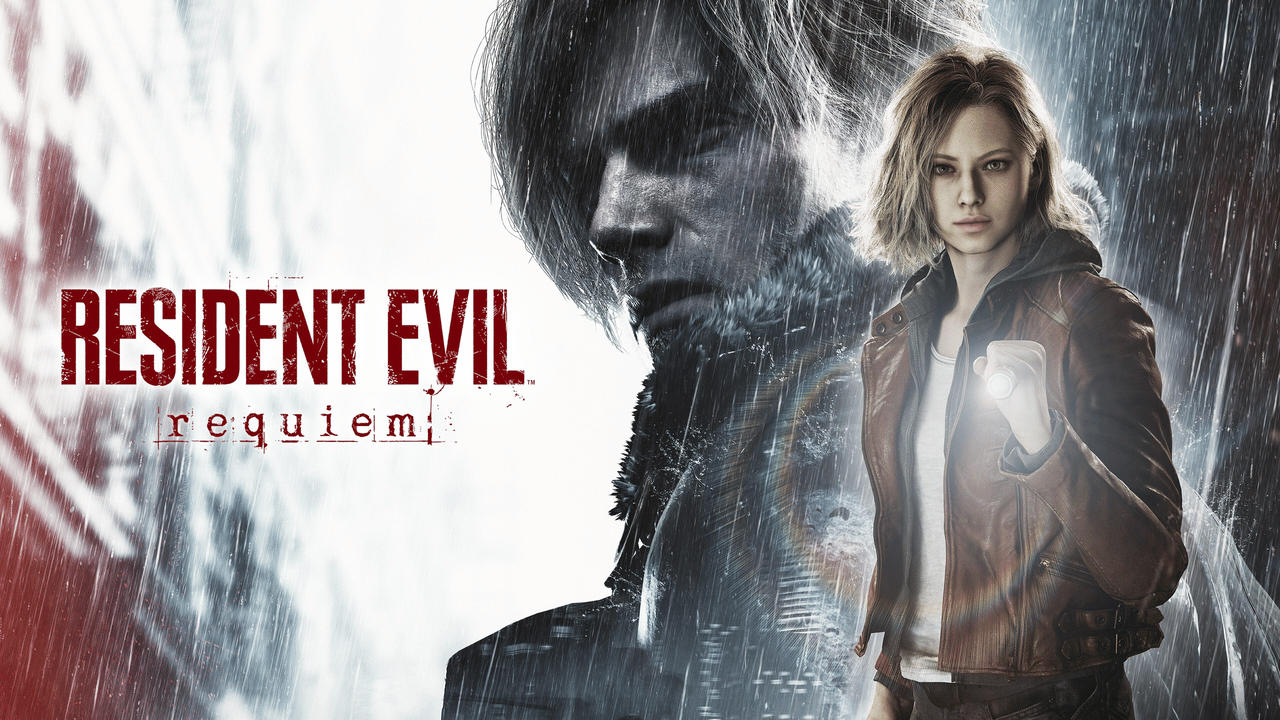
It’s crazy to think that, basically, since 2017, there hasn’t been a bad mainline Resident Evil game. Sure, the RE3 remake was a bit of a misstep, but it was still pretty dang good. I, of course, also say mainline games, because those multiplayer efforts were a waste of fuckin’ time for everyone involved.
Still, though, six games spread over nearly a decade, and they’re all good if not great? Not too shabby, Capcom, not too shabby at all.
And what’s even more surprising is that the latest entry, Resident Evil Requiem, might be one of, if not the best, Resident Evil games ever made. And I say that only partially subjectively, because objectively speaking, Requiem crams just about everything into it, including the kitchen sink – and it does it well.1
It’s not only a follow-up to Village, but also basically a sequel to the RE4 remake, as well. Requiem does so much, and covers so much ground (both in terms of Resident Evil lore, but also simply because it’s surprisingly meaty in terms of length).
Not that I’m a Resident Evil expert or anything. I never really got around to playing the old games while growing up, so the first one I really sank my teeth into, surprisingly enough, was Resident Evil 5. I remember enjoying that game, for the most part, but that’s about it.
Beyond that, I still haven’t touched 6, although I probably will eventually for shits and giggles; it seems like a fun co-op time. And I still think the logo looks like a giraffe getting sucked off, so that’s also fun.
I also dabbled in 7 when it first came out, but didn’t beat it for years, so I wouldn’t really say I became a fan of the series until the Resident Evil 2 remake. But since then, I’ve been pretty on board, having loved 2, 4, Village, and, as I mentioned earlier, the remake of 3 is good, too, for the most part.
Needless to say, the moment Requiem was revealed, I was all over it, and now that I’ve beaten it, I want to talk about it. I won’t shy away from spoilers, just so you’re forewarned. Perhaps the biggest spoiler is that I didn’t really think that the story of this RE game, or any RE game, is anything special. They’re schlocky B-movie hijinx, and that’s about it.
But I’m getting a bit ahead of myself.
Grace and Leon
As you probably know by now, Requiem offers a large dose of playing as both Grace and Leon, and the dichotomy between each of their playstyles does a great job of keeping the roughly 18-hour-long game from getting too long in the tooth.
That said, I do kind of wish that Capcom had kept Leon under wraps and just advertised Requiem as a Grace game. I don’t know how many people would have skipped buying this game had they only seen the trailers featuring Grace. But it might’ve been cool to have gone into it blind and gradually realized what role Leon plays.
And for what it’s worth, Leon plays the role of total badass. It’s actually somewhat hilarious.
Grace plays similarly to how Ethan played in 7 & 8. She defaults to first person (Leon to third—although you can choose first or third for both). She plays more like a survival horror experience: sneaking around, trying to avoid combat, and struggling if you do happen to have to fight a zombie.

Conversely, Leon John Wick’s the fuck out of these zombies. From the moment he shows up, with his fuckin’ jacket and his Porsche, he’s on a tear, and it’s glorious – even though he’s also afflicted with the T-Virus and is dying. Doesn’t stop him from tearing shit up, though.
Perhaps Requiem’s greatest claim to fame is just how effectively it melds the two different flavors of modern RE games. You have the 7 & 8 gameplay of Grace, and then the remake-like gameplay of Leon, and Capcom found a way to do both, and to combine them so effectively.
Rhodes Hill
The first area, Rhodes Hill, is peak Resident Evil. After Grace is kidnapped during what’s basically the prologue (a very moody and effective prologue at that), you wake up inside this mental hospital, and have to figure your shit out.
It’s pretty quick that you realize Grace is more at home behind a desk at the FBI field office than she is out in the field—it just so happens to be a bad turn of events that the “field” is also littered with the undead.

It’s a stark contrast to Leon, who has spent the better part of the last thirty years cleaning up Umbrella’s messes. And that’s exactly how it feels playing the early part of Requiem.
I do wish that they’d found a way to tie Grace’s FBI background into the gameplay a little more. But I guess this is a Resident Evil game, not Alan Wake 2, although Saga’s stuff was very well done.
Once Grace is loosed on Rhodes Hill, it becomes a Resident Evil game: go here, find a key there, avoid zombies over there. That’s not to say it’s rote or forgettable; quite the opposite, actually. Rhodes Hill might go down as one of the finest Resident Evil locations in the modern games.
This new strain of the T-Virus affecting the patients in Rhodes Hill actually causes parts of their personality to continue to persist even beyond zombification. This leads them to sticking to routines they had while alive: maids maiding, chefs, cheffing, opera singers singing, etc. You can use this to your advantage as you navigate the location to avoid direct confrontations – or you can just shoot them through your head.
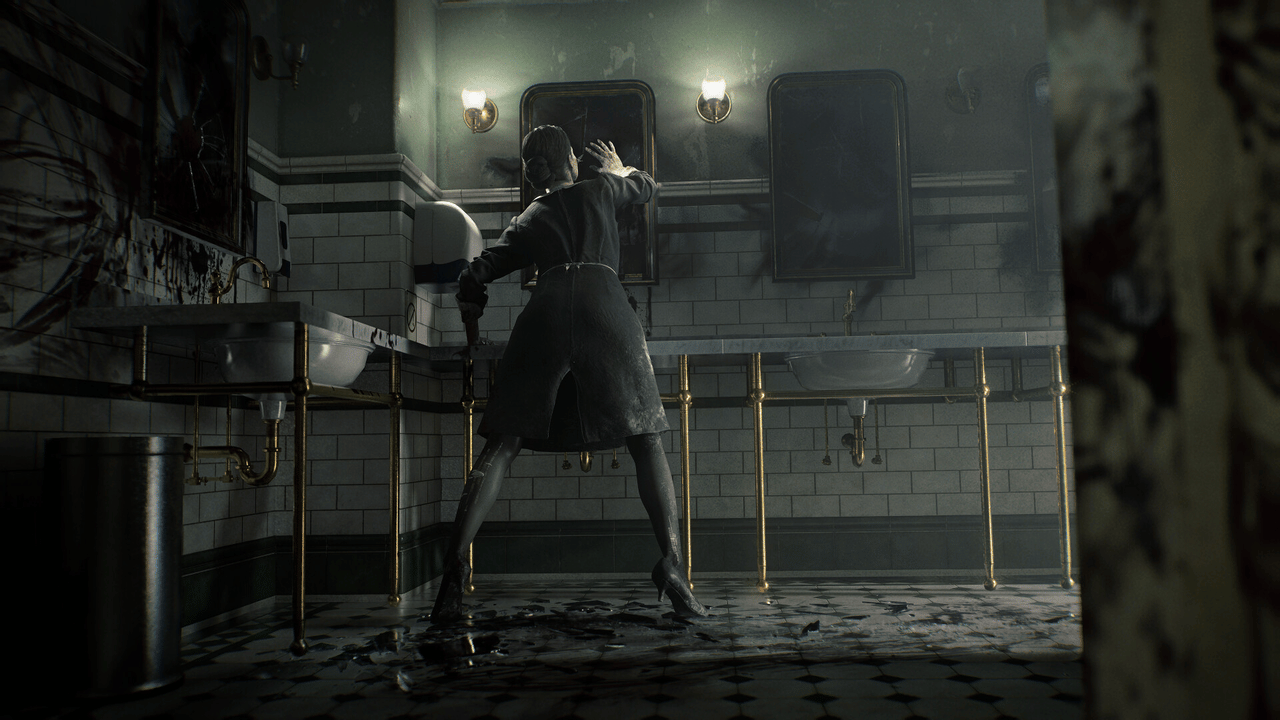
Either way, after Grace has attained three keys to unlock the main door, she can finally escape. This is where Leon comes back into play, as he follows in her wake. His search for the missing FBI agent takes him back through the level that you just explored as Grace, only this time, you’re plowing through everything like a complete badass.
It’s actually quite satisfying to do a bit of “clean up” after spending a few hours sneaking around as Grace. This back-and-forth happens a few times. You play as Grace, struggling your way to the next story point, and then Leon comes in like a wrecking ball and cleans up the mess.
So, in essence, the Leon portions of the game are perhaps slightly easier, at least early on in the game, especially if you’re trying to go guns blazing with Grace, which is perhaps not 100% recommended. It seems like the intention is for you to sneak past most zombies as Grace, but if you put a gun in my hand, I’m probably going to want to use it.
On a semi-related note, I also played the game on Standard (Classic), so Grace had to use Ink Ribbons in order to save. Leon seems to have evolved beyond needing ribbons, because he can save freely.
But for Grace, this had a pretty big impact on how I played the first few hours, since I questioned whether it was a good time to waste a ribbon on saving. That only lasted a short while, because at one point, you get the ability to craft Ink Ribbons, and it’s never really an issue again.
Turns out, blood really is the key (to crafting). In true Resident Evil fashion, Grace can craft items with the help of blood that she sucks up. This is how she can get more ammo, heals, and, of course, Ink Ribbons, as well as health upgrades.
While playing Classic spices things up a bit at the onset, it never really gets too difficult, whether you’re playing as Grace or Leon, which is perhaps a knock against Requiem.
Once you beat the game, you unlock Insanity difficulty, but it would be nice if there was something like Hardcore that slotted in between Standard and Insanity, which you could play right from the start.
But once Grace makes it out of Rhodes Hill, and does a few more levels in that general vicinity, she gets whisked away by our game’s villains (who we’ll talk about later), and Leon gets back in his Porsche and goes after her.
And that leads you to the second half of the game, which takes you …
Back to Raccoon City
For the first half of the game, Grace is the star of the show, with Leon showing up for brief interludes to basically kick some ass and then disappearing back into the shadows.
The Rhodes Hill stuff had me questioning how much of a role Leon would really play in RE9. But once make it to Raccoon, it’s basically the Leon show, with Grace becoming the side character. In that way, it almost feels like two different games, and to good effort, although I don’t think Raccoon City is nearly as good of a level as Rhodes Hill is.

While it does have its highlights, like going back to the police station, which is honestly one of the best sections of the game, so much else about Raccoon City is just sort of samesy, and quite ugly to boot. But of course, the city is in ruins, so it’s about how you’d expect the city to look after thirty years.
It’s also worth mentioning that, while the performance for the first half of the game was great, I had some mean frame rate drops in Raccoon City. Turns out, it was a BIOS setting called Resizable Bar causing the issues. So, if you have some terrible frame drops there, too, it would be worth trying that for yourself – if you feel comfortable rooting around in your BIOS. I’ve also read that some people found better performance by lowering mesh quality.
As a city in shambles, as you’d expect, a lot of Raccoon City is brown, gray, and drab, and the level design isn’t nearly as interesting as the first half of the game. It does get better as you go on, but the first couple of hours of Raccoon City, at least visually speaking, were a bit of a disappointment.
Requiem, however, finds a way to keep it at least somewhat interesting. Once you start playing Leon for real real, you gain access to a new mechanic too. Leon quickly picks up a bracelet that tracks his kills in a sort of gamefied credit system. He can then use the credits he earns to buy and upgrade weapons and consumables.
Zombies also take a conceptual step down. No longer are these next-gen zombies that retain some of their traits of being alive. Now, they’re a mix of newly zombified soldiers who arrived here some time before Leon, as well as zombies who somehow survived since the bombing of Raccoon City.
They get the job done (and Leon does a good job of slaying them), but they’re not all that interesting. Somehow, they still retain the ability to operate mortars to try fuck up Leon’s day, so that’s weird. But hey, video games. While the first part of Raccoon City is a bit of a drab downer, in addition to RPD, there’s also a section where you climb a building that had partly collapsed, which was really enjoyable. The windows become the ground, and you can shoot out the glass to make zombies fall.
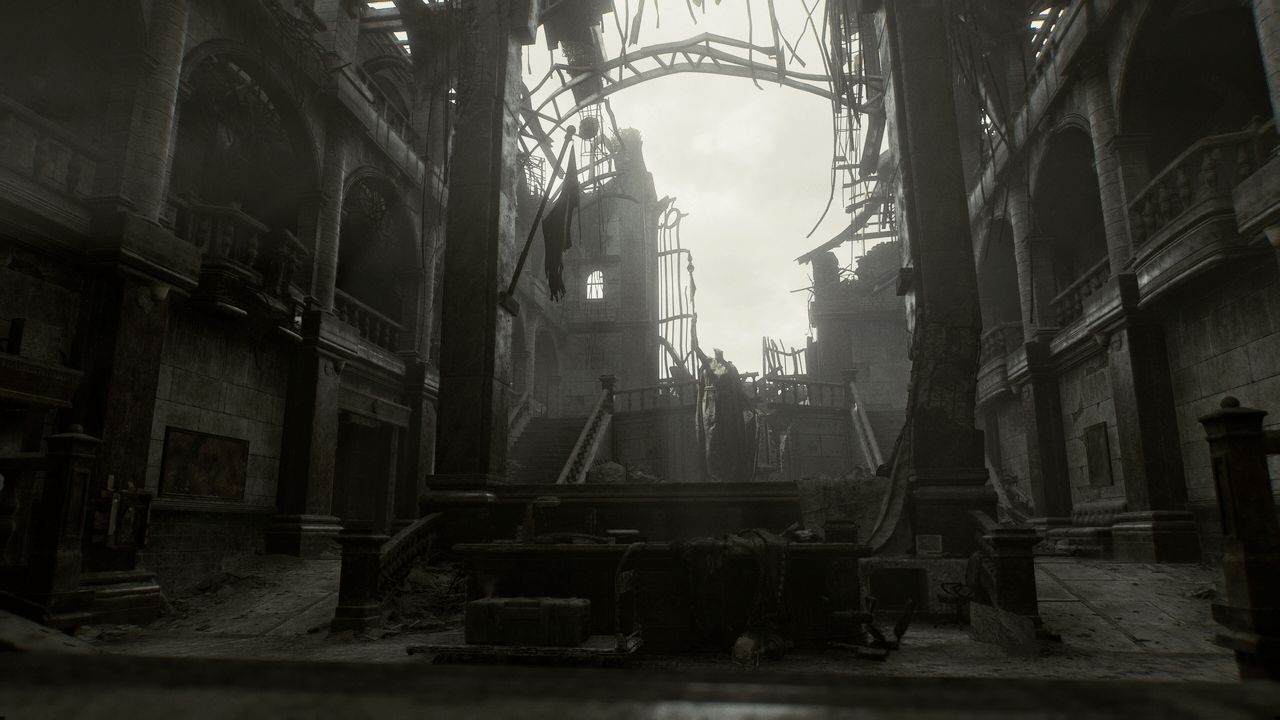
Beyond this, there’s also a really silly motorcycle chase halfway through the Racoon City part of the game. It’s goofy fun, and I really enjoyed it – although it makes the city seem way more navigable than it really should be. Still, it’s ultimately a great deal of bombastic fun that gives you unlimited ammo and tells you to go hog wild.
Once you make it through the city, you enter another clandestine lab, which plays host to the end of the game. This area is very neat, visually speaking. It’s very futuristic, clean, and sci-fi, maybe too much so for a facility that was, in theory, originally constructed in the 90s, but hey, that’s Umbrella for you.
Raccoon City also shows the return of an old nemesis (but not that Nemesis) of Leon, which means it’s finally time to talk about boss fights.
Shoot the Glowy Bits
It’s while in the RPD that Leon bumps into the Tyrant once again – because nothing is ever truly dead. After avoiding him in the station, you eventually have a showdown in a parking lot that opens with a hilariously awesome scene of Mr. X tossing a badass missile right at you. From there, his chest opens up, because why not, and you dump ammo into his heart to kill him.
It’s perhaps the most “RE” of all the boss fights, but there are a few others both after this and before, as well as a few scenarios that play out similarly to boss fights. Grace must evade “the Girl” throughout the entire first part of the game, bumping into her a few times. Eventually, though, she’s able to finally kill her by exposing her to sunlight, because why not?
As someone who really isn’t all that physically capable, not like Leon, who is physically capable of just about anything, that’s about the only boss fight with Grace, although she can choose to kill one other enemy, one of the huge monstrosities called Chunk, but you can also leave it alone. For the most part, Leon gets to have the rest of the fun, even having to kill a different Chunk.
About the only boss fight that gave me any sort of trouble was Planet 43, which you bump into on your way to the clandestine lab. That’s only because I kept trying to parry the fucker, but you specifically can’t do that and need to move out of the way of vine strikes – but I’m stubborn. However, once you kill the weed, it’s onward to the end of the game.
Victor, Zeno, and the Story at Large
This lab, however, is where you have the final showdown with the game’s villain(s), Victor Gideon, and some random fucker named Zeno. Both villains are a bit of a wash. Victor kinda lumbers around the entire game, acting like he has a grand plan, but that grand plan in the end was hilariously off.
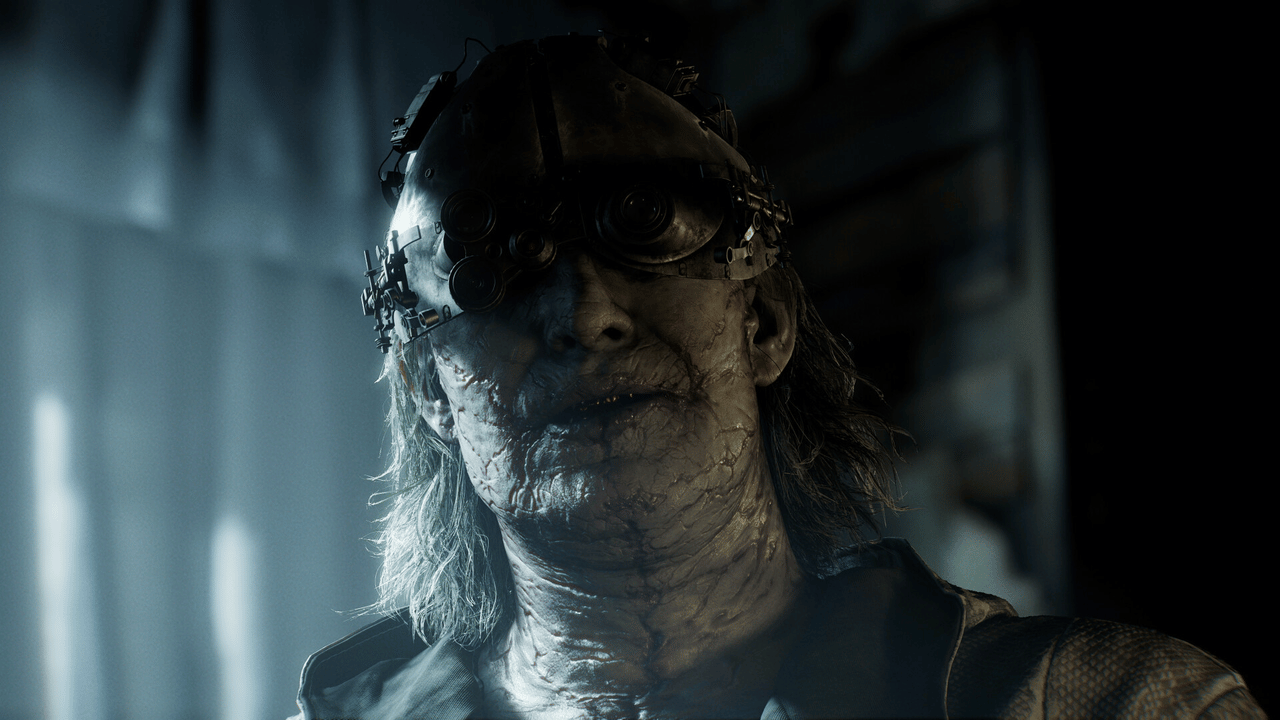
Zeno, who doesn’t seem to have much of a role to play except for being a reason to squeeze Albert Wesker back into the game. I’m assuming he’s a clone, although his origins are pretty unclear – and he has a pretty unceremonious end. But clearly, Wesker always returns.
There’s some solid mustache-twirling shenanigans from both of them, but the end of the game kinda proves how silly they both are. They spend the entire game searching Elpis (you know, Elpis Prespley), thinking that it is some kind of superweapon that will let them mind control people. To this end, they believe that Grace is somehow the key to unlocking the power of Elpis.
So, the end of the game comes, and you’re left with two choices: either release Elpis or destroy it. As it turns out, Elpis isn’t a mind control drug. One of Umbrella’s original founders, Oswell E. Spencer, had second thoughts about the whole Umbrella malarky and created a second hope for redemption. (Elpis is the Greek goddess of hope.)
As such, Elpis is an antiviral. Which is great news for Leon, who, as this whole scenario is playing out, is literally lying on the ground dying of the T-Virus. It’s just a bit hilarious that as Zeno injects himself, thinking that Elpis will give him godly mind control powers. Funnily enough, all his T-Virus bullshit vanishes, Grace waits an oddly long time to run over and inject Leon with Elpis as well, but she eventually does, and just as soon as Leon gets his mojo back, the final boss fight with a mutated Victory plays out.
While this is the canon ending, if you choose to destroy Elpis, a much shorter ending plays out in which Leon gets his brains blown out, and Grace narrowly escapes. So, one ending is significantly better than the other.
I’m not exactly a Resident Evil lore aficionado or anything, but it seems like Requiem has plenty of lore tidbits and new information for any diehard fans of the franchise to sink their teeth into – which is in stark contrast to 7 & 8, which are sort of their own thing, and only tangentially related to the greater lore.
I will say, once you finish the game, one of the extras that unlocks is Grace’s FBI report, which I found to help explain certain aspects of the story very well. It’s a fairly short read, too, that is more like a PowerPoint presentation than an actual FBI report.
Let’s Wrap This Baby Up
I feel like I could maybe make an argument that Resident Evil Requiem is greater than the sum of its parts. That’s not to say any of its parts are mediocre, but Capcom is able to so skillfully combine so many different flavors of RE that it’s rather sort of amazing.
I think the Grace stuff is better than RE7 and 8, but the Leon stuff at the end of the day, probably isn’t as good as RE2 and 4 remake, but it comes damn close. And personally, I enjoyed playing as Leon more than playing as Grace. But again, I liked everything about Requiem – there are just certain aspects I liked more.
I do want to go back and try to grab a few more achievements, not that I’m someone who chases platinums (or the Steam equivalent). Requiem was just good, and I want a reason to play more of it.
It ultimately left me really excited for the franchise’s future. I know there’s a hot-off-the-presses rumor of another RE1 remake, which I’m all for. That first game is a classic, but I tried to play it and just found myself annoyed at how dated some of it was.
There’s also been talk of a Code Veronica remake. Sign me up. And of course, there will eventually be Resident Evil 10. Sign me up for that, too, while you’re at it.
GRAMMAR TALK: I’ve decided to stop using em dashes (—) because AI loves em dashes, and fuck AI, so instead I’m going to start using en dashes with space ( – ).