
Wuchang: Fallen Feathers Is Not Without Its Annoyances, But I Still Had Quite a Bit of Fun

While Wuchang is not without its positives, and I did finish it, let’s get the big negative out of the way first: I did not enjoy most of the boss fights. Not because they were too difficult or uninspired—but because they were annoying as fuck. The game’s level design isn’t exactly great either, but we’ll get to all of that later. I just wanted to set the stage.
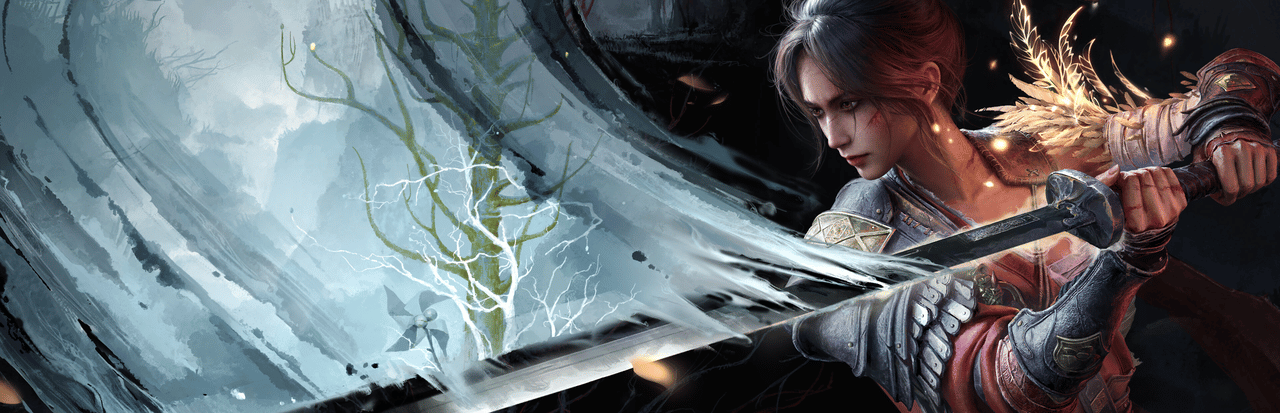
Wuchang: Fallen Feathers
If you’ve not really seen much from Wuchang, and thought to yourself that it might be somehow related to that other game that came out last year, Black Myth: Wukong, then don’t sell yourself too short. I’ve seen this confusion myself a few times.
But nope, despite both being similar and both made by Chinese developers, they are in fact not related. Despite that, I didn’t come out of either one with glowingly positive impressions—although truth be told, my opinion of Black Myth has probably softened, and I’ve been thinking recently that I might want to do a NG+ run, but I’m also a fool.
But let’s talk about Wuchang instead. It’s a souls-like, similar to the eponymous Dark Souls, as well as Elden Ring, Lies of P, and, of course, Wukong. And it leaves a really solid first impression that gradually sours as the difficulty ramps up.
It’s Not All Bad
There are aspects of Wuchang that I really appreciated, especially with the combat and progression. There’s a lot of satisfaction to be had in building and maximizing a build.
The skill tree (Impetus Repository) contains quite literally everything. It’s where you increase your stat points, empower your flasks (both usage and potency), and train your weapon mastery (instead of upgrading the weapons themselves). It’s split into six branches: a general one and one for each different type of weapon.
It takes a little getting used to, especially since the entire tree uses a few different currencies; the primary one is Red Mercury, which is also what you get from killing enemies. You can distill that into Essences that serve as skill points to level up all of the attribute increases in the Repository. Everything else—the flask upgrades, the weapon masteries, etc.—has its own resource, too.
One thing that it took me, and definitely a few other people I’ve seen play the game, a little while to realize is that while the attribute upgrades all require Red Mercury skill points, other upgrades don’t require these skill points at all, and just the material that you’d find in the world.
What this means is that you can spend your skill points to gain access to these other non-attribute upgrades, and then unlock those without needing a skill point, just their respective resources. It’s a little weird, but it’s ultimately pretty dang nifty.
Best yet, you can respec the Impetus Repository for free whenever you’re at a Shrine (which is Wuchang’s version of a bonfire), so if you want to try something different, or move around a few skill points, it’s easy. I respec’d a few times to try a different weapon, and a few times just for shits and giggles.
Dress for the Occasion
Another nice thing is that Wuchang doesn’t have a weight system, so you can wear just about whatever without worrying about how it impacts your mobility—no fat rolling here.
That just means that armor only really serves to give you resistances and mitigation for certain types of damage, which is important to keep in mind for some of the areas and some boss fights.
More than once, I found myself dressing for the occasion, equipping the best gear I had for Frostbite or Corruption resistance, or if a boss did Slashing damage, I made sure to stack that. It was hard to tell how much these resistances really helped—but they sure didn’t hurt.
Weapons and Combat
Another great thing is that, unlike most of these types of games, where you upgrade your weapons with some sort of crafting material found throughout the game, in Wuchang, the weapon upgrades come in the form of masteries on the skill tree.
As such, whenever you want to try out a different weapon of the same class, i.e., longsword or dual blades, you can just swap it out and get hackin’. Since each weapon has slightly different scaling, and unique abilities, it’s really nifty to be able to swap them out and see how they feel.
I stuck primarily with the dual blades, for a bit of fast slicing and dicing, but I also played a fair amount of the longsword. It’s also worth mentioning that you can equip two weapons and swap between them—and there’s even an attack that will switch your weapons, but I hardly ever used any of these mechanics.
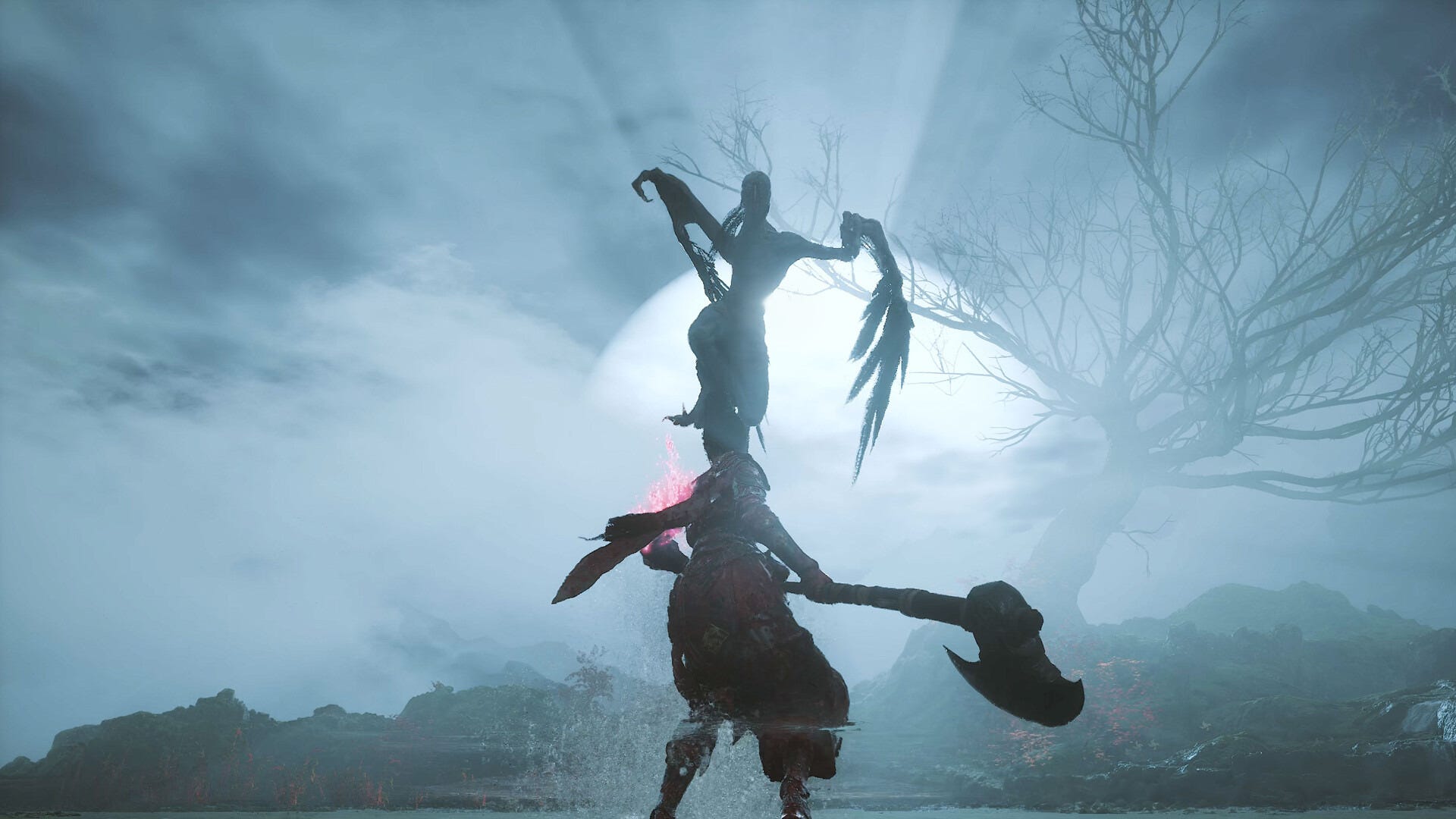
For dual blades, there are a bunch of different options, but I stuck with one of the first pairs of blades I found: the Twin Bandits. They come with the ability to deflect attacks, which can really come in handy—too bad I hardly took advantage of it.
In terms of basic attacks, you can, of course, perform a Light Attack, a Heavy Attack, and if you hold the heavy attack button, you can perform a Charged Heavy Attack, and if you’re behind a humanoid enemy when that happens, you stun it and then perform a big “Obliterate” attack, which does a lot of damage.
On that note, enemies also have an Obliterate meter, and if you keep the pressure on by constantly attacking, you’ll fill that poise meter, and they’ll also get stunned that way, too. But if you aren’t able to keep the pressure on, that meter will reset, which sucks.
Another reason I loved the dual blades is that they are really good at clashing. Think of this mechanic as being similar to a soft parry. With clash, if you’re attacking while the enemy is attacking, you’ll negate a lot of the damage. It’s seriously great, but at the same time, if you rely too heavily on clashing every attack, and you take a few hits, it’s game over. So, it’s a little risky, but when it works, it’s fantastic.
There are five total different types of weapons (dual blades, longswords, axes, spears, and one-handed swords), so there’s plenty of room for experimentation to find a build that suits you.
Needles and Gems
You can further customize weapons through a couple of avenues: Tempering and Benediction. Tempering allows you to use your feathered arm to buff your weapon. There’s a lot of customization here through Bone Needles and Stone Needles.
Bonies, as we’ll call them, let you set a specific damage effect, like Fire or Poison, while Stonies let you have a smaller buff, like faster damage build-up or longer tempering. There are a lot of combinations here, so you can find something that works for most builds.
You can basically look at Benediction as a sort of Gem system that allows you to socket “gems” into the weapon for various buffs. There are even set bonuses if you socket all the same type of “gem.”
The Might of the Skyborn
Integral to the combat system, no matter which weapon you’re wielding, is the Skyborn Might system. This is a limited resource you gain by perfect dodging, parrying, and through certain weapon attacks. For instance, the last attack in the Dual Blades combo gives you an instance of Skyborn Might.
So, once your build “comes online,” which happens pretty early into the game, you can get charges pretty quickly, stacking up to five. Skyborn Might can then be expended to power up attacks or cast spells.
What I mostly used Skyborn Might for was to instantly cast a Charged Heavy Attack, which was basically my entire strategy throughout the game: Perfect Dodge everything, build up Skyborn Might, get behind enemies, stun them with a Charged Heavy attack, and then Obliterate.
You can also empower other special abilities with Skyborn Might, and cast spells. I didn’t rely too heavily on spells, but there were a few that I used throughout the game—the cheaper ones. Spells cost anywhere between one and five stacks of Skyborn Might, and I really preferred to spam Charged Heavy Attacks rather than do anything else with Skyborn Might.
Ultimately, I grew to really enjoy the combat system in Wuchang; it’s too bad that the bosses tended not to let me use any of these tools … like ever.
Wild Goose Chases Masquerading as Boss Fights
My biggest issue with Wuchang is the boss fights. It’s not that they’re difficult; it’s just that they’re annoying and frustrating—at least most of them; there are a few really enjoyable ones.
It’s not even polish-related, although there are some recurring strangeness with the hitboxes: “How did you hit me?” … or my favorite, “Why didn’t I hit you!?”
Often, I’d go into a Charged Heavy Attack, and they’d leap away or move before it actually made contact, and sometimes, it appeared as though the attack should’ve connected but didn’t.
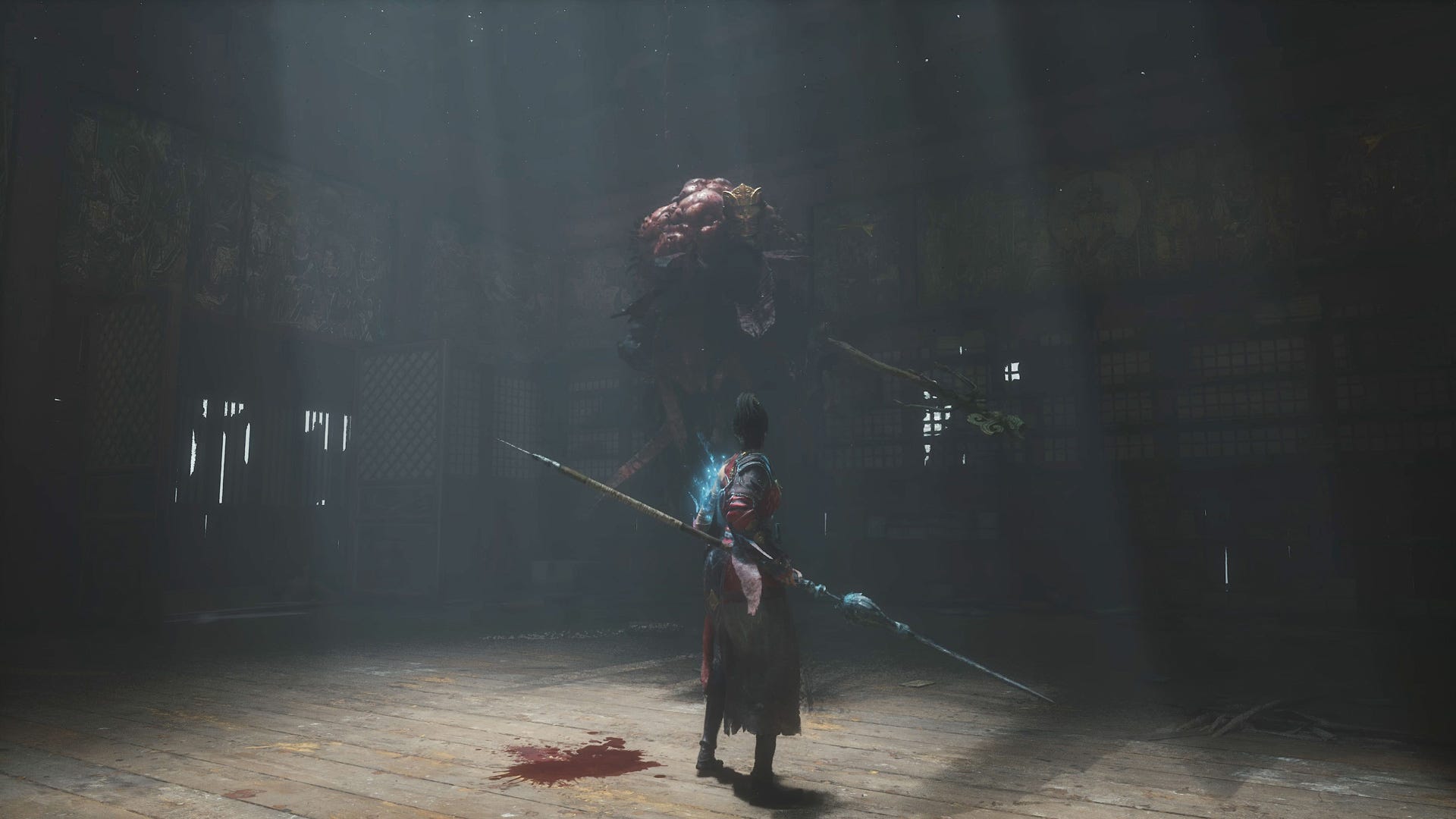
And on top of that, the constant movement of a lot of these bosses made it annoyingly tricky to keep the obliterate meter from resetting—which was even more annoying on the non-humanoid enemies, since they couldn’t be instantly stunned from behind with a Charged Heavy Attack.
Ultimately, I feel like a lot of the bosses are just designed to be unfun. Souls games should be challenging, but never unfun. And really, most of the bosses in Wuchang aren’t even that challenging. I think I only got stuck a couple of times, specifically on one of the later bosses: Fierce Tiger.
And this fucker pretty much exemplifies what I dislike the most about the boss fights in Wuchang, and it’s ultimately a really simple complaint: they move around too fucking much.
Take the Fierce Tiger as an example. This dives in and jumps away constantly throughout the fight, forcing you to chase him all over the arena while he lobs near-one-shot attacks at you.
It would be fine if this were just a one-off design, but so many of Wuchang’s bosses work in a similar fashion. They’re constantly leaping around the arena and prove to be more annoying to fight than challenging.
There are a few exceptions, and all of those are the skill-check bosses that just sit still and allow you to trade blows, dodges, deflects, and clashes. Those were the fights I really enjoyed.
Level Design Was Also a Bit Underwhelming
By and large, I think Wuchang looks quite good: solid art design, good graphical fidelity, and animations are pretty good too. Level design, however, leaves something to be desired.
Most areas could best be described as relatively samesy and meandering. More than once, I found myself exploring a location and not being exactly sure where I had and hadn’t been because everything looked pretty similar.
Areas weren’t even that open; they were just linear with diverging paths that looped around each other with a main path to the next boss, shrine, or objective.
These level-design woes extended to the stretches of time between some shrines. There are a few spots where it feels like hours (slight hyperbole) go by without another shrine and another chance to save your progress.
Then, to add insult to injury, right after you trudge through eighteen hours (slightly more hyperbole) of adventuring and finally make it to a shrine, within the general vicinity, you’ll find five separate shortcuts and then the next shrine right around the corner—something I found to be quite hilarious.
Levels overall aren’t without a few moments of glory, with some great views of certain set pieces—and some of those many seemingly unnecessary shortcuts do come in handy—but once you actually go from the outskirts to the interior of any level, it gets old rather quickly.
But At Least It’s Purdy
The good news is that while you’re going around in circles, Wuchang (both the game and admittedly the person) looks quite striking. For the person (her name is literally Wuchang), you can dress her up in all manner of gear, and if you don’t like the look of what you’re wearing, you can change it to look like any other piece of equipment for that slot. The looks range from risqué, because of course, to way less risqué and rather badass.
The game itself also looks pretty great, even if it’s subject to a lot of the performance issues typically found in Unreal Engine 5 games, but nothing that detracts too much from the experience, and I ended up having a pretty good time on my computer, but my computer’s pretty good.
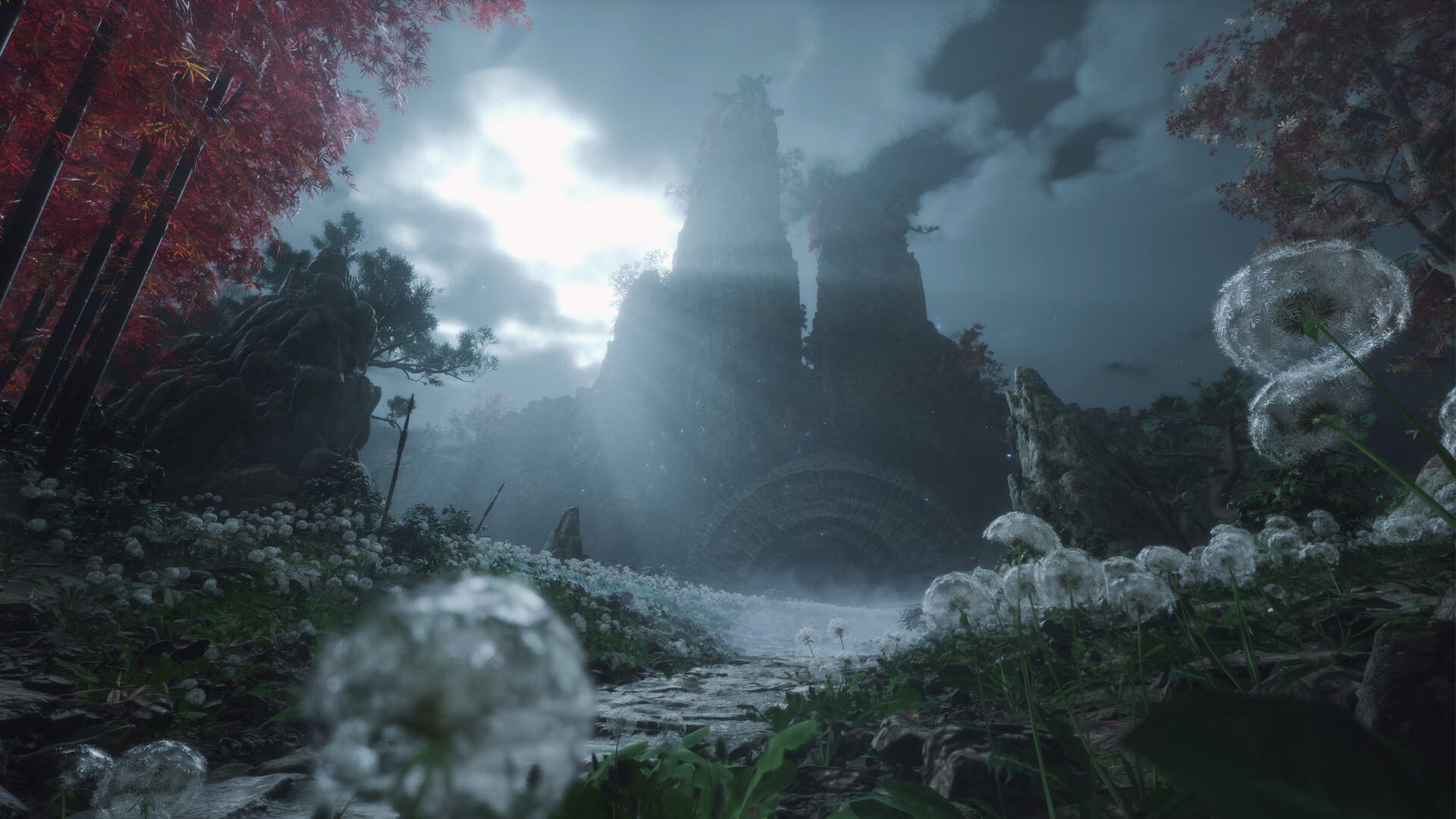
The lighting, environments, settings, and overall art design are really nice, even if some of the areas do tend to get a little repetitive. Then, toward the end, when things become a little more fantastical, the environments start to look really cool—but still repetitive.
Final Thoughts
Wuchang: Fallen Feathers is by no means a bad game. In fact, if it had come out a few years ago, it might be the best third-party Souls-like out there. But in that time, we’ve seen so many great games, such as Lies of P, Wukong, and Khazan. I haven’t played that last one yet, but everyone I know who’s a fan of these types of games loves it. So, it’s definitely on my list.
Wuchang, however, sits behind all of these games. It has a pretty promising start, and I was rather digging it throughout the first 6 or 7 hours, but once the difficulty started to ramp up, it started to annoy me more than bring me joy, especially the boss fights.
As an experience, Wuchang: Fallen Feathers is fun enough (minus a few of the boss fights and level design), carried mostly by the satisfaction derived from slicing fools up. But I don’t think it’ll be as well-loved as some of the other Souls-likes standing amongst a pantheon of great games. As a Game Pass download, though, it’s an easy recommendation.