
Slitterhead Is Weird – And I Sort of Loved It (Sort Of)

Admittedly, I fuckin’ love body horror. Don’t ask me why. The Substance was one of the best movies of 2024. The Thing is one of the best movies ever. In The Fly, Jeff Goldblum turns into a true handsome devil. And who would’ve thought that Justin Long would make such a great walrus?
With that in mind, it’s easy to see why Slitterhead piqued my interest from the moment I first laid eyes on it last year. I was keen to play it at launch, but considering that it got a bit of a mixed reception, I figured I’d wait till a sale—and that’s exactly what I did. Fast forward a few months, and I nabbed it for 50% off on the Steam Summer Sale.
And I’m glad I did; as expected, certain parts of the game are right up my alley. For starters, the body horror inspirations are plain to see—and though it doesn’t match the heights of some of the best examples of the genre out there, I don’t know why anyone would have expected it to.
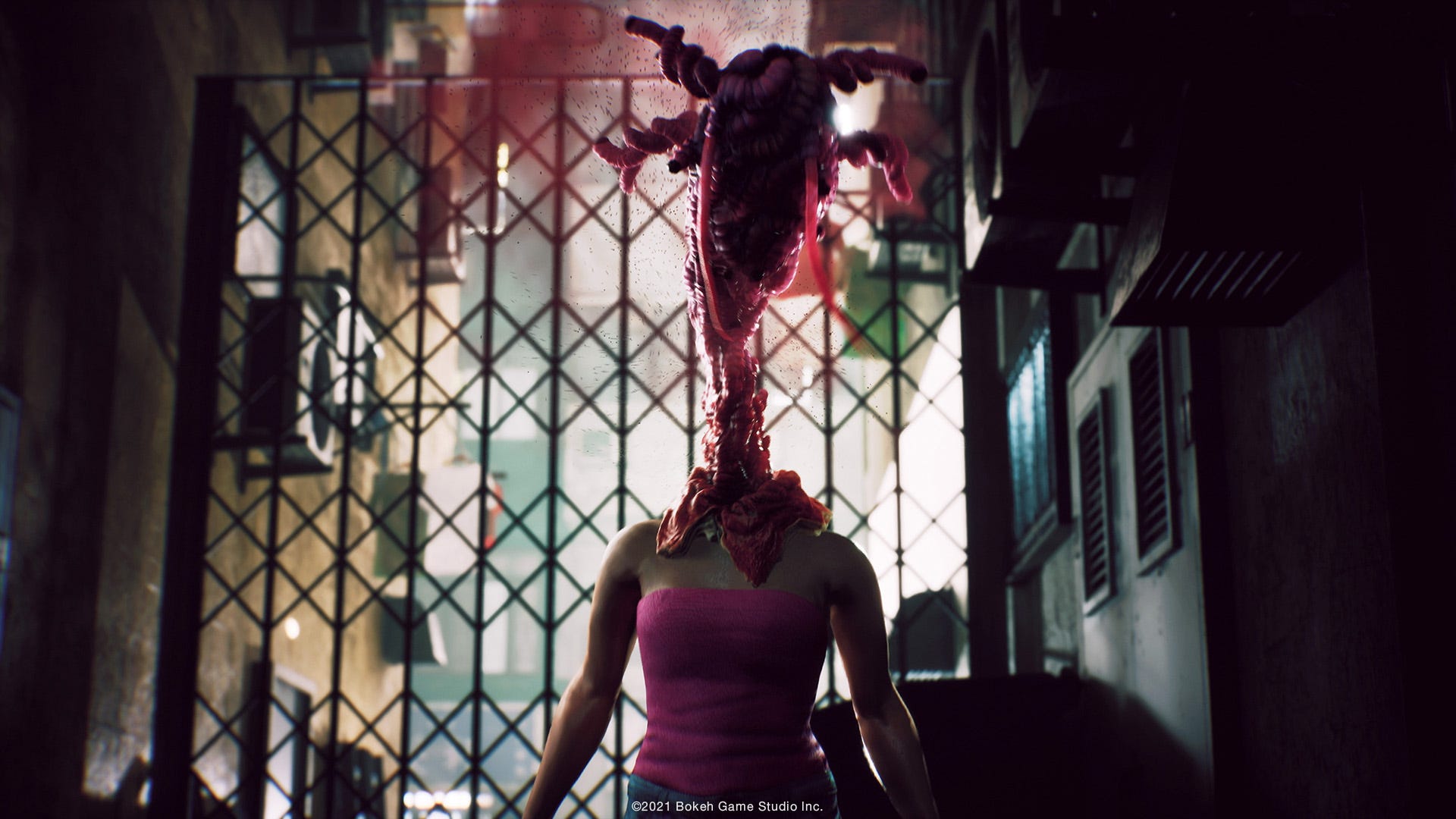
After all, it’s a video game, not a movie, and on top of that, it’s unfair to compare it to some of the best examples of the genre. It’s not every day you get to see Jeff Goldblum become a fly-man. Slitterhead does, however, conjure up thoughts of Parasyte: The Maxim—or that recent Netflix spin-off, Parasyte: The Grey (which is honestly better than you’d expect).
So, absolute cinema this is not, but Slitterhead certainly has its moments—typically reserved in some of the pre-rendered cutscenes. Outside of those handful of pre-rendered moments when this game gets deliciously grotesque, it’s just that—a game.
Sadly, it’s also not an amazing game, although it’s by no means a bad one. I came out of my nearly 20 hours thinking more good than bad about it. Deep down, it’s got a lot of interesting ideas and some novelty (while also feeling quite dated, in a good way). And, outside of the body horror, some of my favorite aspects of Slitterhead came as a surprise.
So, let’s get Slittering.
Oh Hey, It’s the Guy Who Made Silent Hill
Though you probably won’t be able to tell from looking at it, and probably not from playing it, either—although there are moments—the creative director of Slitterhead is none other than the creative director of Silent Hill: Keiichiro Toyama, who’s also behind classic games such as Siren and Gravity Rush.
Slitterhead probably won’t be as well remembered as those games, but I think there’s enough here to give it cult status in a decade or two. Out of my own little friend group, only a handful of people had even heard of it.
But Body Horror Aside, What Is This Thing?
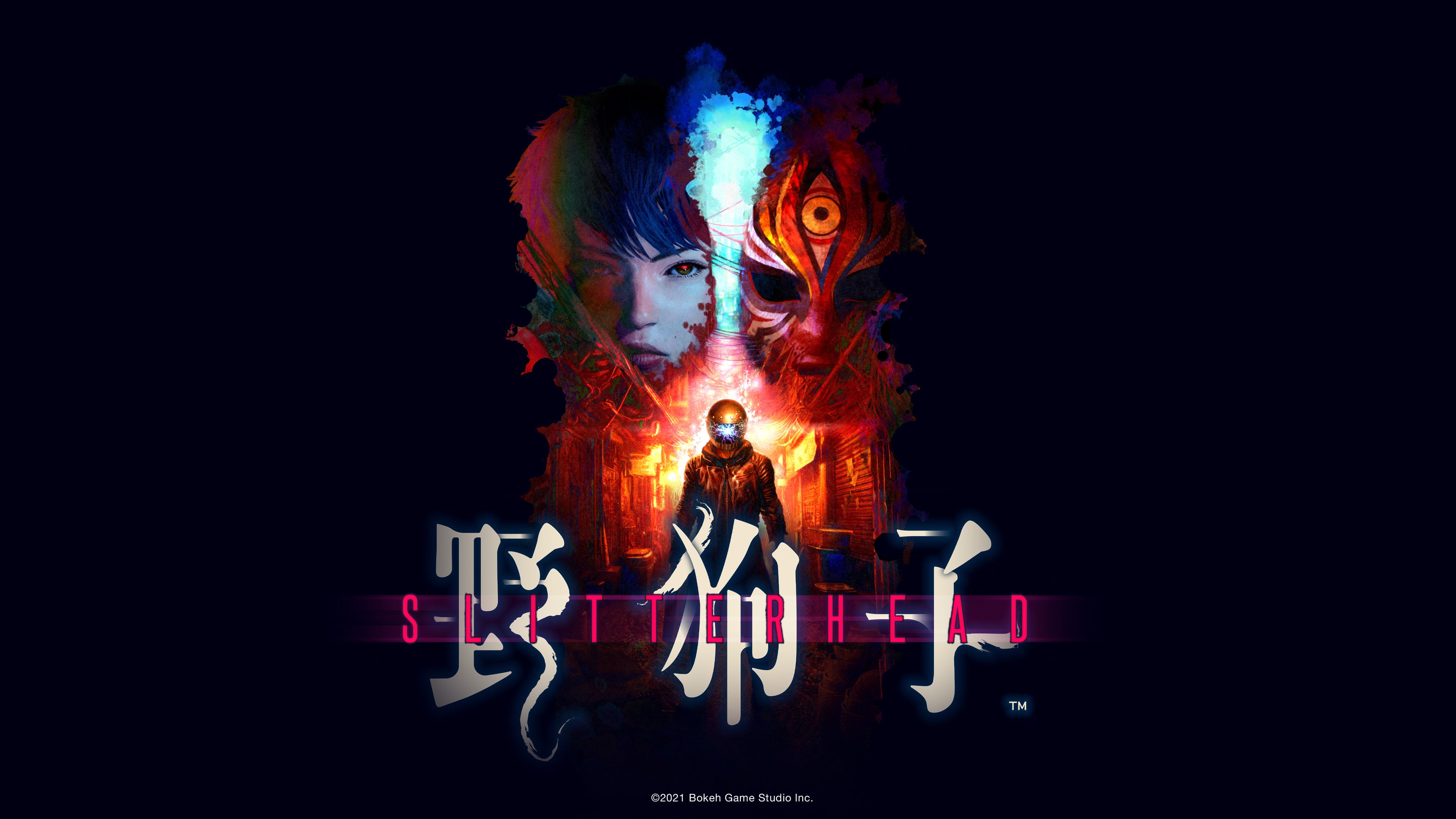
Slitterhead, at its core, is a 3rd-person action/horror game. These “Slitterheads” in question are monsters that have begun to infect people in the city of Kowlong (basically a fictionalized version of Kowloon Walled City) during the 90s. So, imagine a cramped, little city with lots of high buildings and alleyways—and lots of prostitutes. It would probably stink, too, if you could smell video games.
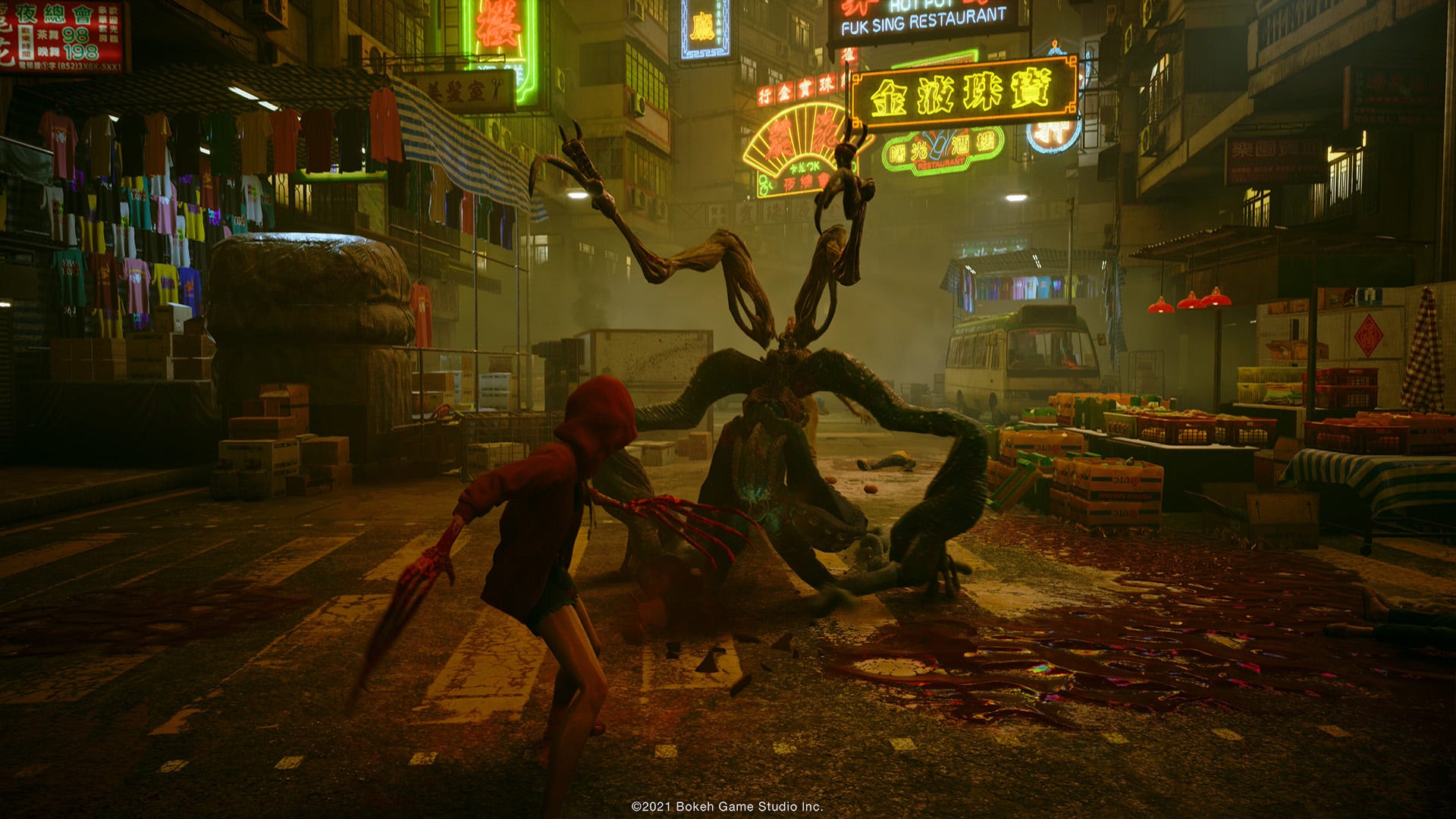
You play as the “Spirit” (or Hyoki), a disembodied being that can jump into the minds of mere humans to control them to kick Slitterhead butt. Soon, one of the first characters you meet in the game, Julee, decides to call you Night Owl after a story she remembers.
Julee, aside from having naming privileges, is a “Rarity.” For her and others like her, Night Owl can not only possess them but also grant them more power and special abilities. In a sense, these Rarities become your party members and accompany you throughout the rest of the game.
A Bevy of Rarities
A lot of the game revolves around the Rarities, specifically their interactions with Night Owl, and the story, for what it is, has as much to do with them (as people) as it does laying some whoop-ass on those pesky Slitterheads. These interactions and the story that unfolds turned out to be one of my favorite aspects of the game.
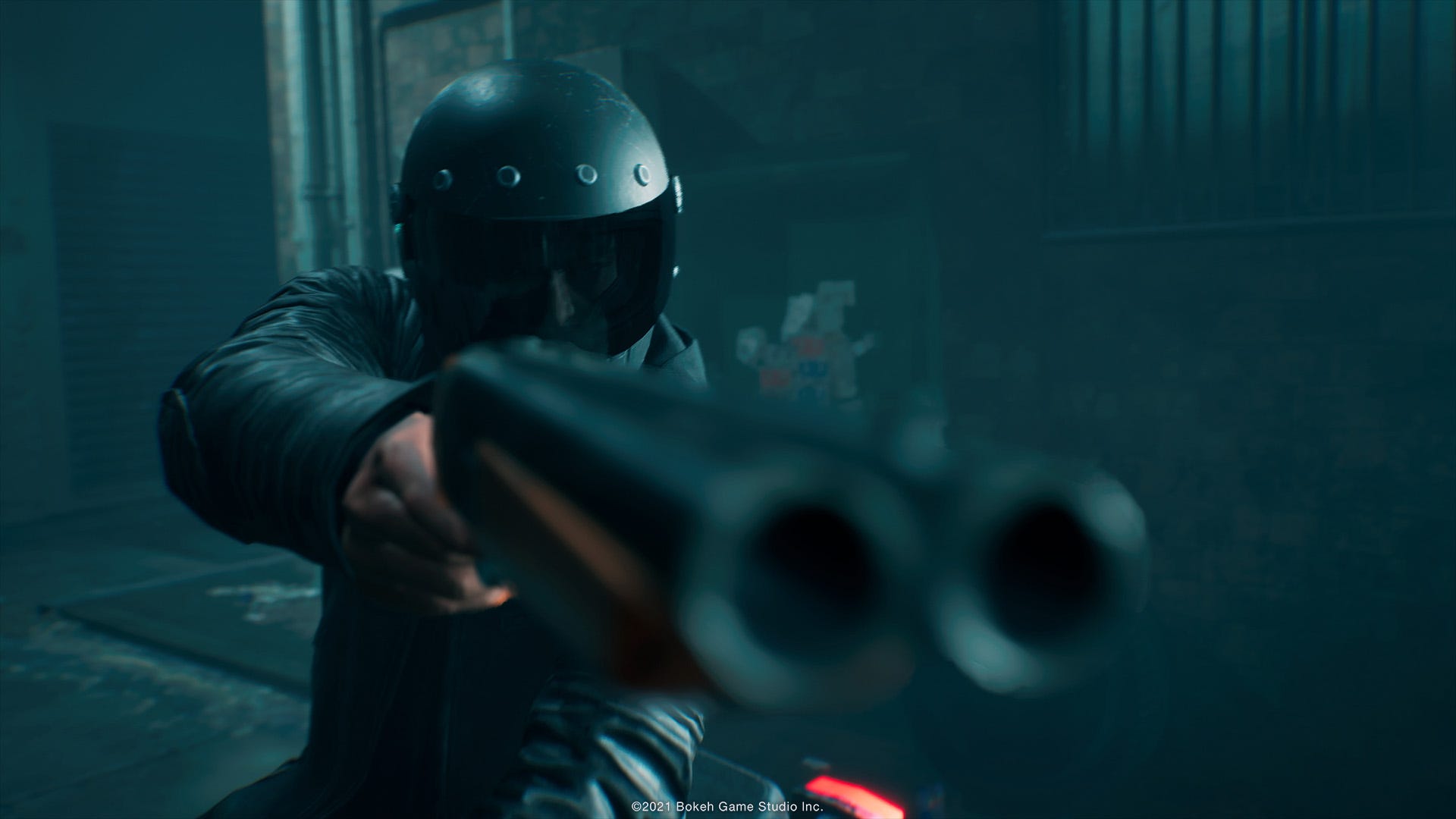
All together, there are eight Rarities, with the most important of the two being Julee and Alex—the latter of which is an angry fucker who likes to go around in a motorcycle helmet and kill every last Slitterhead. A major plot point is how Alex’s anger affects Night Owl later in the game.
Between missions, there’s an entire screen dedicated to talking to the Rarities, and you’ll learn lots about each of them, their motivations, and how they feel about being thrust into this Slitterhead shindig. It’s also through talking to them that you unlock most (if not all) of the missions. So, it’s not something that you can avoid.
There’s very little voice acting, except for a few of the pre-rendered cutscenes, so these conversations play out through lines of text. Most of the writing is mostly fine—with a few localization woes. You could make the choice to skip through all of it, but you’d be pretty lost when it comes to the story.
And for what it’s worth, I really enjoyed the story. Slight spoilers to follow, with even more later.
It gets especially interesting when it’s revealed that Night Owl can send his consciousness backwards and forwards through time. So, before long, you’re getting into some time travel/causality stuff that, as a sci-fi nerd, I really dug. Though it is a slight spoiler, I’m sharing timey-wimey stuff as a motivator for people to check out the game: the most interesting aspects of Slitterhead’s story have literally very little to do with the Slitterheads themselves.
In fact, the game’s events take place over the course of three days. You can just jump around this span and do different versions of missions depending on which time loop you’re on.
This pre-mission warm-up screen, where you chat with your Rarities, is also where you upgrade them, including their weapons, abilities, and an array of passive buffs they receive. With enough skill points, which you earn on those missions, they can become pretty dang powerful.
Outside of that, it’s just a matter of picking a mission, selecting which two Rarities you want to bring along, and go, go go.
Slitterheads and More
Despite only taking place over three days, there are actually quite a few missions, and though some of them are just different versions of the same mission (thanks time travel), the game does a good job of not becoming too repetitive—but it is a wee bit repetitive.
No matter the mission, the game has you engaging in three different activities: either fighting Slitterheads, chasing Slitterheads, or stealthing past Slitterheads. For what it’s worth, I rather disliked having to chase Slitterheads around, especially since you have to do it so often—and for so long. Typically, you’ll start fighting an enemy, and it’ll up and run off after a certain point, then you have to chase it and repeat the process.
Granted, I didn’t much like the stealthing either, but those sections were few and far between, so it wasn’t too bad. Combat is easily the best part of the game (outside of the story), but even then, because of the limited enemy varieties, you’ll start to feel that repetition toward the end.
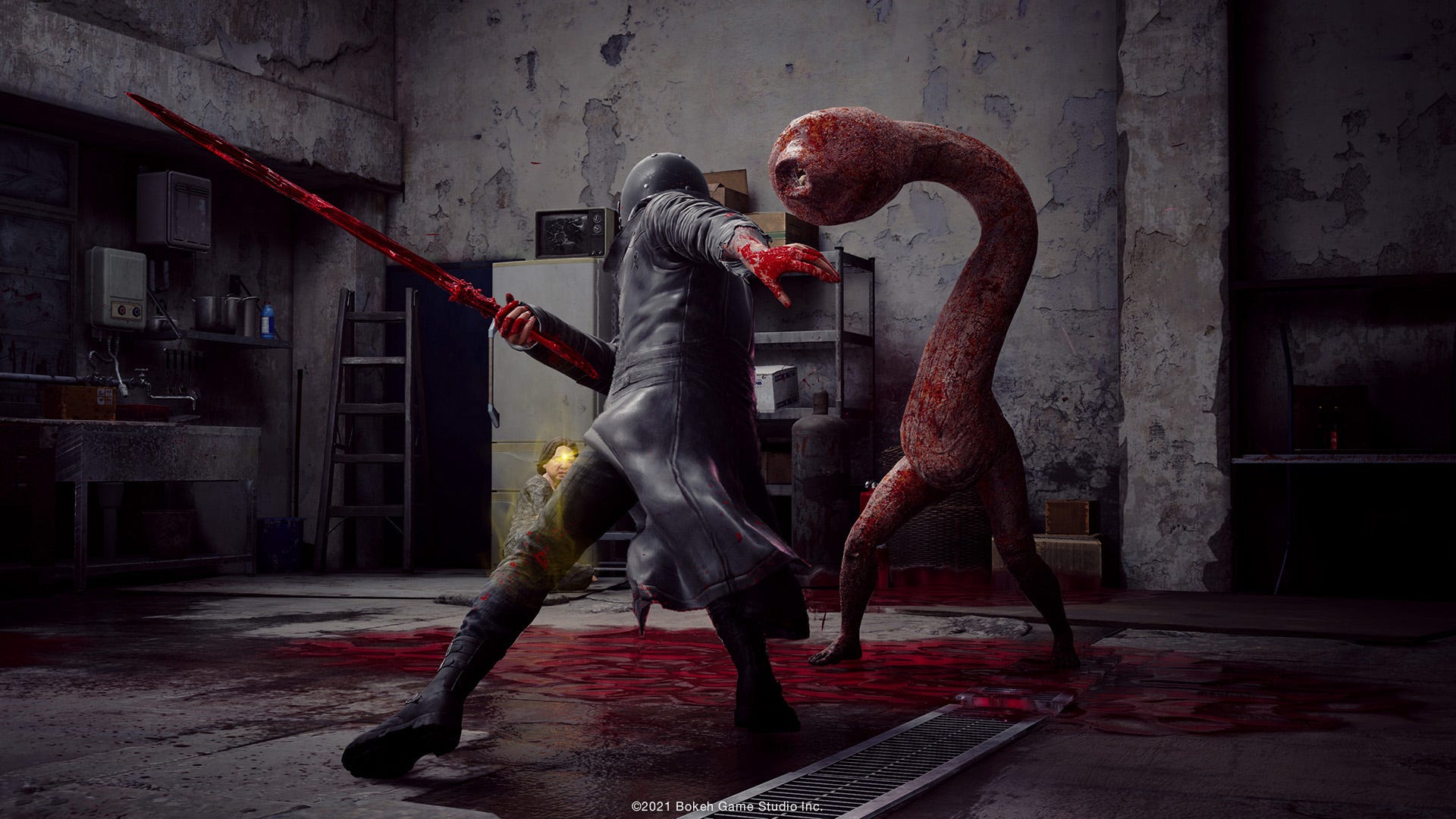
Those enemy varieties include little penis monsters, bigger penis monsters, and then the titular Slitterheads. Early on, these are primarily humans with a monster head, and then those will often (but not always) transform into full-blown Slitterheads.
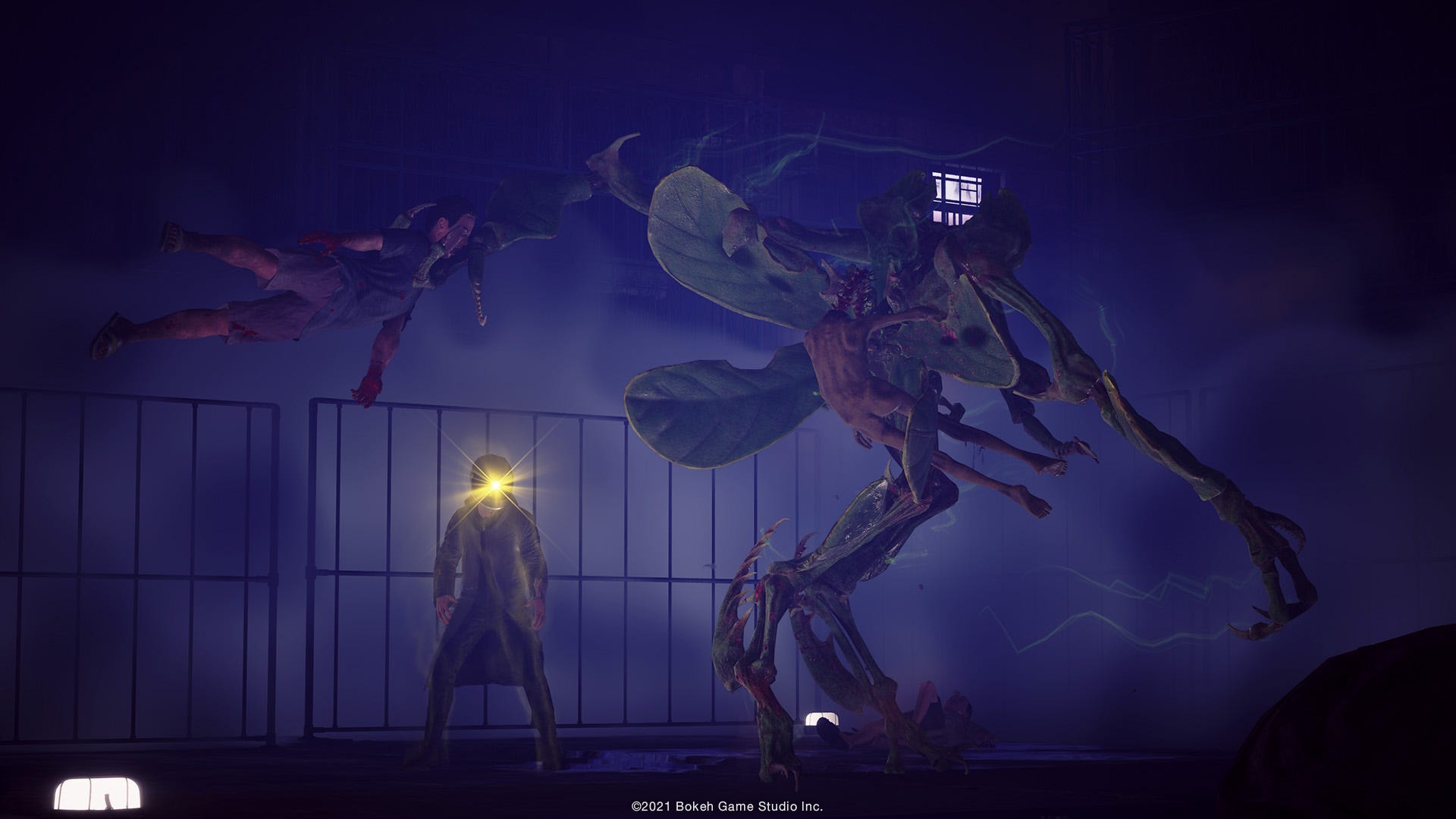
The big Slitterheads are great because they have little lifeless human bodies dangling from their backsides, right where you’d imagine their butt might be, which, to me, is far more hilarious than grotesque.
The downside is that each of the full-blown slitterheads is of roughly a similar design, just with a different skin and different attacks, so it ends up being a case of: “If you’ve fought one big ole Slitterhead, you’ve fought them all.” You can attack that dangling body to remove it, which stuns them—and that’s fun.
Outside of regular enemies, there are also the bosses, which are a highlight, fortunately. Not only do each of the major ones receive a great little pre-rendered cutscene showing the human transformation, but the fights themselves are interesting too.
It’s during these bossfights that the combat system really shines, probably because it’s the one part of Slitterhead’s gameplay that has the most depth.
Blood as a Weapon (Because Why Not)
One neat thing is that whenever Night Owl possesses a person, he can use their blood to conjure up a weapon and to cast various abilities. This applies not only to regular old civvies, who give simple mace-like weapons, but also the Rarities, who get unique blood weapons, as well as upgradeable abilities.
As a tip, don’t be afraid to use the civilians. They’re not half bad—although when you’re host-hopping, it can be pretty easy to lose track of where your Rarities are in the fray, since there’s not a special highlight for them or anything.
Melee combat involves either attacking or blocking, and if you’re blocking, there’s a directional parry system that you can use to power up an ability that slows down time and gives you mana to cast spells that don’t outright use blood.
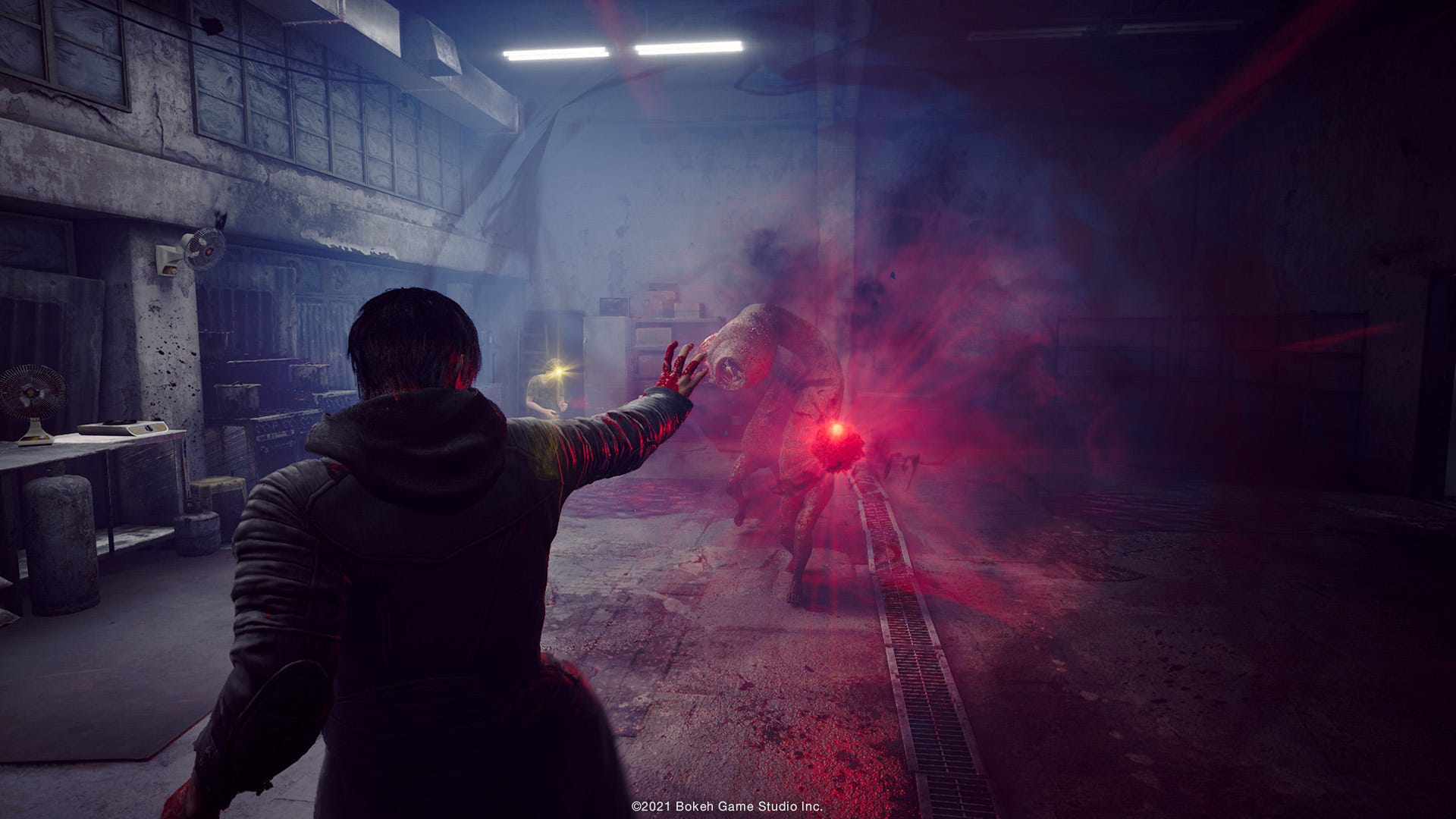
As a multi-purpose resource—since you use it for both dealing damage and taking damage—blood is a hot little commodity. Use too much of it to deal damage, and you’ll be at a sliver of health and then, boom, dead. Then, if your host goes down, Night Owl loses a life, although if you’re quick enough to leave a host right before it gets downed and switch to another, you don’t lose one of these lives, but if you get taken out three times, that’s game over.
Juggling seems to be the best way to handle the enemies. Get a few whacks in, then once the Slitterhead starts gunning for you, jump ship to a new host, be it a regular civilian or a Rarity, and you can usually get a few hits without resistance.
Unfortunately, the AI tracks you pretty effectively, so you really do have to juggle, because they’ll probably switch to target your host not long after you’ve gotten in the driver’s seat. Sticking to one character allows you to get parries in and cast abilities, which is pretty nifty, too.
Each Rarity has four separate abilities. Three that are unique to the character, and one that is shared with either the other Rarity you brought to the mission or the civvies. This leads to some pretty interesting combinations depending on which two Rarities you bring along with you on missions.
It’s this head-hopping, resource management, and ability usage that keeps the combat from being too repetitive.
A Few More Spoilers
To explain why I ended up really liking Slitterhead, I kind of have to talk about spoilers, so if you’re already on board with the game, maybe skip this section. But I’m not the boss of you, either, so do whatever you want.
Time travel really does play a major role in this game, because—although it really doesn’t make a huge difference in the long run—it’s revealed that the Slitterheads themselves are time travelers who were turned into monsters when the time travel process went awry.
Regardless, toward the end of the game, things get really neat when Slitterhead becomes less about fighting with the Slitterheads and more about trying to stop our angry cohort, Alex, who sort of lost it after his lady friend, Lisa, is Slitterified and then killed.
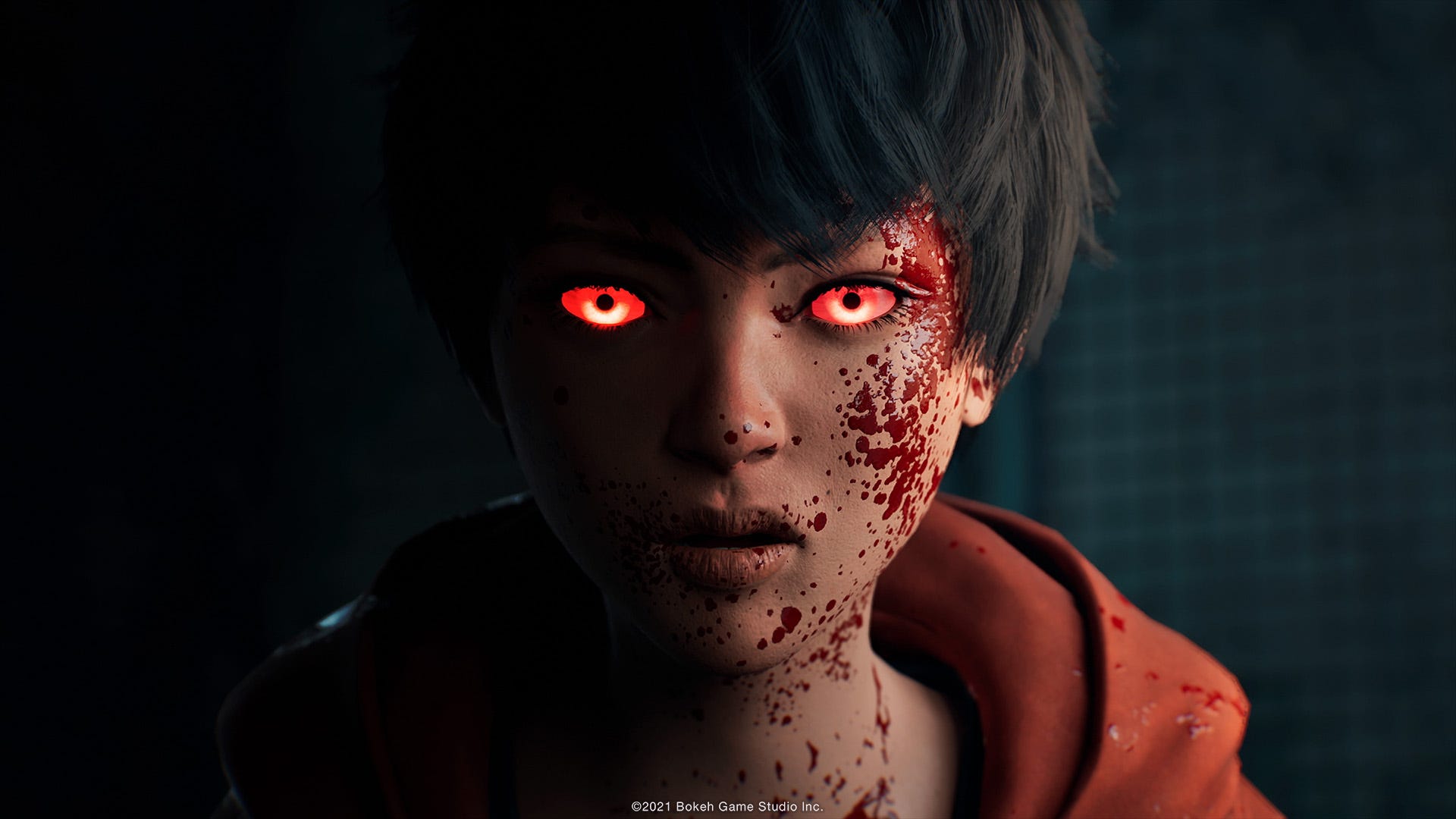
Alex isn’t alone in going rogue; he has the assistance of another Hyoki, Leopard Head, and the two of them go on a rampage, killing the other Rarities. This is where things get really fun, as Night Owl and Leopard Head start to bounce around the timeline, getting into all sorts of shenanigans that have little to do with the Slitterheads themselves.
Although it’s not really too surprising, Leopard Head turns out to be really just a different version of Night Owl who has let Alex’s burning hatred take over.
So, at the end of the game, while you fight Alex to try to defeat him and keep the other Rarities alive, Alex just says fuck it and flies a goddamn plane into Kowlong, killing just about everyone.
Oh, but the game doesn’t end there. Night Owl time travels once more to try to fix things, which is where the game’s post-game comes into play—and wrapping things up a second time didn’t take too long, and would’ve taken less time if I could read.
You can fix things if you help Night Owl go back into missions and reduce the number of causalities that occur (or that’s what I thought it read). It made enough sense to me—it’s a game about time travel after all—so I jumped into my first mission to unbranch this time shit, without a clue how to actually lower the causalities, and after replaying a couple of missions, still kind of clueless as to what to do.
It’s at that point that I realized that I, writer and editor extraordinaire, had misread the objective: it had said CASUALITIES, not CAUSALITIES, which, in hindsight, made infinitely more sense.
So, the goal then is to replay the missions and try to avoid civilian deaths. This didn’t take me too long, just replaying 2 or 3 missions, but be warned that on some of the missions, death is unavoidable. Even so, it didn’t take me long to go from 166 casualties to the required 100.
At that point, you can do it over one more time, defeat Alex for once and for all, and save Kowlong to get the true, true ending. There’s still collectibles and shit to gather, but who has time for that? I don’t.
Putting It All Together
While I came out of my time with Slitterhead more up on the game than down, it’s not without its faults. To reiterate again: it gets a little repetitive, the localization isn’t great in spots, and I hope to never have to chase another Slitterhead for as long as I live.
However, that said, I really appreciated both the overarching story as well as the body horror vibes that it was going for. I guess, at the end of the day, I’m just a sucker for horror.
So, would I recommend it? Maybe. If you made it this far and my words piqued any sort of interest, give it a whirl.